Skiing With Toddlers: How to Teach a 2 or 3 Year Old to Ski
Published
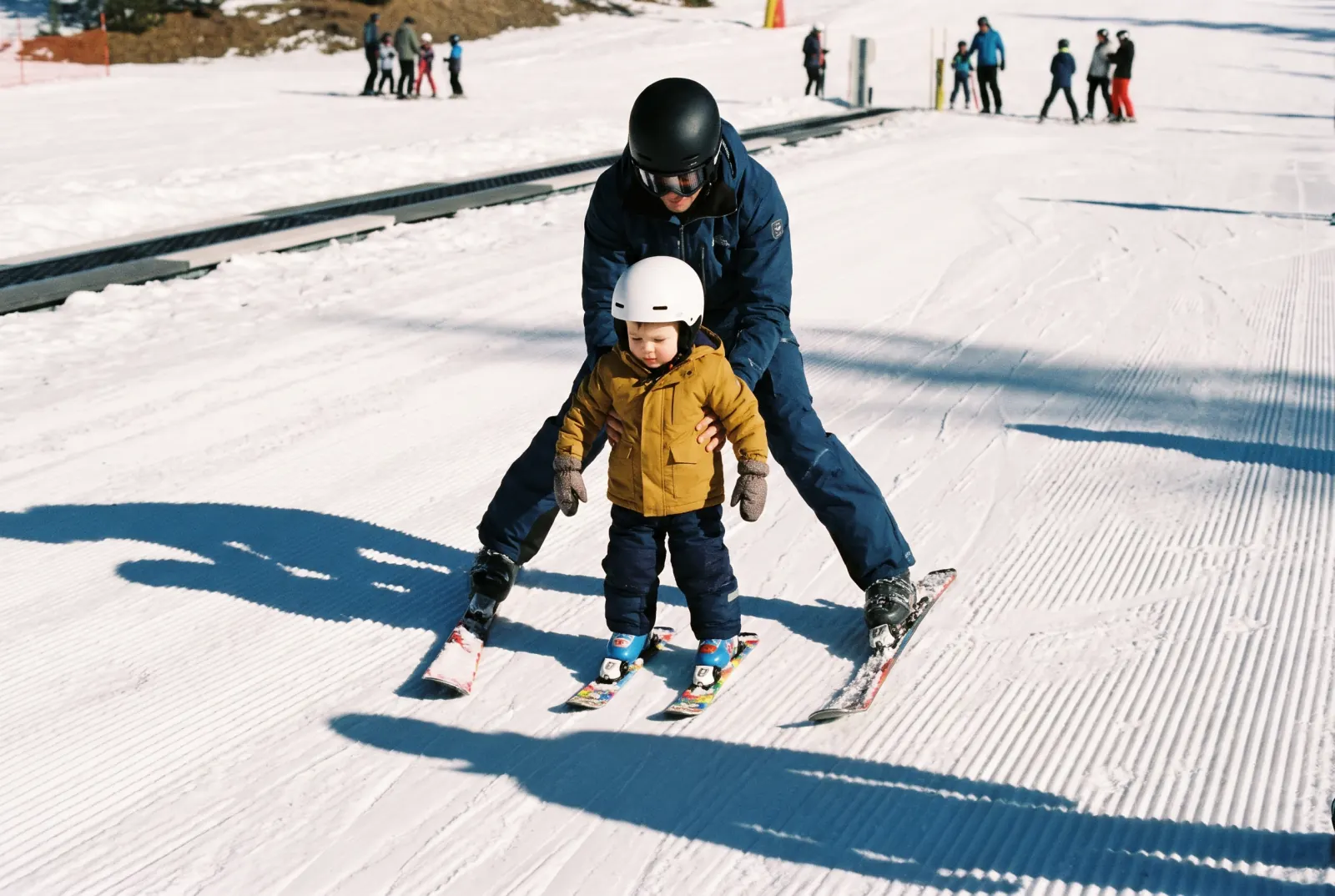
Skiing with a toddler is a different sport from skiing. You'll spend most of the day on flat snow and the magic carpet, you'll carry two sets of skis, and if your 2 year old gets 30 minutes of sliding in before asking for a snack, that's a good day.
It's also a lot of fun, and a kid who has played on skis at 2 shows up to ski school at 3 or 4 already knowing what boots and a magic carpet feel like. Here's how to do it, from the first time they clip in to the first time they ride a lift, plus naps, cold hands and altitude.
If you're still deciding whether your kid is old enough, start with what age kids can start skiing.
Set the bar low
The goal for a toddler's first season is that they like snow and want to come back. That's it. Turns, stops and chairlifts can wait.
What a realistic day looks like at 2 or 3:
- 20 minutes to an hour on skis, broken up.
- A lot of standing still, falling over and lying in the snow.
- At least one snack stop and one meltdown.
- Done by lunch, or by nap time.
Three year olds in ski school don't ski all day either. Deer Valley trains its instructors on the idea that a 3 year old has about a one hour attention span, according to the Deseret News. Plan your day around that.
How to teach a toddler to ski, step by step
These steps go in order, but you won't get through all of them in one day, or even one trip. Move on when they're bored, go back when they're scared.
- Boots at home. Put the ski boots on in the living room a few days before. Let them stomp around. Ski boots feel heavy and strange, and the first time shouldn't be at the resort with cold feet.
- One ski on the flat. On flat snow by the lodge, clip in one boot and let them push along like a scooter. Then swap feet.
- Both skis, walking and sliding. Still on the flat. Small steps, little glides. Pull them along by their hands or a ski pole while they hold on.
- The tiniest slope you can find. A gentle rise near the base, or the bottom of the magic carpet run. Walk them up a few steps, turn them around and let them slide into your arms.
- Between your skis. Ski the carpet run in a wide wedge with your toddler standing between your skis, your hands on their sides or hips. This is how a lot of parents do their first proper runs together.
- Pizza. Show them "pizza" (tips together, tails apart) to slow down. A tip connector like the Edgie Wedgie holds the ski tips together so they can't cross, which helps a lot at this stage.
- Ski backwards in front of them. Once they can wedge, ski backwards down the carpet run in front of them, holding their hands or one end of a pole, and slowly let go.
- The chairlift. Only when they can stop on their own. Usually 3 or 4, not 2.
Make every step a game. Barbara Ann Cochran, an Olympic gold medalist who teaches kids at her family's ski area in Vermont, told Yankee Magazine to "make it more like playtime" and you'll all have a better day. Ski to the snowman, count the trail signs, pretend to be a bear. Anything but "bend your knees".
Harness, leash or Edgie Wedgie?
Walk around any beginner area and you'll see toddlers on leashes. They work, with trade-offs.
Ski harness
A vest with handles and long reins, so you ski behind your kid and control their speed. It lets a 2 year old get real runs in. The downside is that the leash does the stopping and steering, so the kid doesn't learn to. Ski Utah's Jodi Saeland notes that a harness can pull the kid's weight backward, when you want it forward over their boots. And one ski dad who asked instructors about leashes found the worst case was a kid who refuses to ski "off-leash" at all. His verdict for a 2 year old's first try: "a run or two on a leash is hard to beat." Use it for a taste, not as the plan.
Tip connector (Edgie Wedgie)
A small rubber or plastic piece that clips the ski tips together so they hold a wedge without trying. It's cheap, it's what a lot of parents and ski schools start with, and it comes off as soon as they're holding the wedge themselves. Cochran's take: "If they're gaining confidence with the Edgie Wedgie, it'll come off sooner rather than later."
A ski pole
Hold one end of a pole horizontally, let them hold the other, and ski backwards in front of them. It gives them something to grab without pulling their weight back.
A good order is pole or hands first, tip connector for the first wedges, harness only for the occasional longer run.
Plan the day around naps
A toddler who skips a nap on a ski trip will make the afternoon hard for everyone. Don't fight it. Something like this works for a lot of families:
| Time | What |
|---|---|
| 7:30 | Breakfast at your lodging, get dressed (it takes 30 minutes) |
| 9:00 | On the snow while it's quiet and they're fresh |
| 10:00 | Snack and warm-up indoors |
| 10:30 | Another short session, or snow play |
| 11:30 | Lunch |
| 12:30 | Nap at your lodging, or in the stroller or carrier |
| 3:00 | Sledding, the pool, hot chocolate |
This only works if you're staying close to the snow, so make that the first thing you look for when you book. The first family ski trip guide covers how to pick a resort with this in mind.
Toddler programs and childcare at US resorts
If you want to ski as well, a lot of resorts take toddlers, either in childcare or in programs that mix childcare with a short ski session. A few for 2026/27, checked on each resort's site:
| Resort | Program | Ages | Price |
|---|---|---|---|
| Okemo, VT | Giggle and Glide, about an hour on snow, groups of 1 to 3 | 24 to 48 months | $300 a day |
| Okemo, VT | Toddler and Twos childcare | 18 to 36 months | $210 a day |
| Aspen Snowmass, CO | Program with a 1 hour ski, lunch and gear included | 2.5 to 3 years | Not listed |
| Big Sky, MT | Small Fry Try, 45 minute intro lesson | 2 to 3 years | Shown at booking |
| Deer Valley, UT | Children's Center childcare | 2 months and up | $215 to $235 a day |
| Jackson Hole, WY | Private Nannies, 8:30 to 4:30 | 5 to 36 months | $499 a day |
Toddler spots go first, especially on holiday weeks. Book as soon as your dates are set.
The other option is the parent swap. One parent skis the morning while the other does snow play with the toddler, then you swap at lunch. It's free, and everyone gets some skiing in.
Cold, sun and altitude
Toddlers get cold faster than you, and they can't always tell you. A few things from pediatric sources worth knowing:
- Dress them in layers. The American Academy of Pediatrics recommends "several thin layers" to keep kids warm and dry. No cotton next to the skin.
- Check fingers, toes, ears and cheeks at every break. The AAP says frostbitten skin "may turn white or pale gray and form blisters". If you see it, get inside and warm the area in warm (not hot) water.
- Sunscreen, even when it's cold. The Skin Cancer Foundation says UV exposure goes up 4 to 5 percent with every 1,000 feet of elevation, and snow reflects up to 80 percent of UV. Put it on the face, ears and under the chin, and reapply every 2 hours. For babies under 6 months, the AAP says to use sunscreen on small areas like the face only when shade and clothing aren't enough.
- Watch for altitude sickness. Children's Hospital Colorado says kids get altitude sickness at about the same rate as adults. In toddlers, watch for extra fussiness, less play, pale skin and not eating, especially after the first night.
The gear that handles most of this (mittens that go over the sleeve, a neck gaiter, goggles that fit a small face) is in our toddler ski gear checklist. A few ski books for kids are a good way to get them excited before the trip, and ski gifts for kids covers what grandparents can buy.
Things that make it easier
- One small backpack with snacks, spare mittens, wipes, sunscreen and a water bottle covers most of the day.
- Bribery is fine. A gummy at the bottom of every run gets you a lot of runs.
- Stop before they want to. End on a good run, not a crying one.
- Bathroom before you head out, every time. A one-piece snowsuit, boots and a helmet take a while to get off.
- Don't ski with them in a carrier. If you fall, they fall with you.
- Talk it up at home. Before the trip, read ski books and watch kids skiing. Our board book 1 2 3 Ski With Me counts one to ten through one kid's day on the mountain, with "tips in, heels out, pizza down the straight" on the number eight page, and it's made for ages 0 to 3.
 1 2 3 Ski With MeA counting board book for kids 0 to 3. One kid’s day on the mountain, counted from one to ten.See the book
After the lifts close, small kids tend to love the après ski part of the day more than you do: hot chocolate, wet mittens by the fire and an early night.
FAQ
Can a 2 year old ski?
Yes, for short sessions on very gentle terrain, usually with a parent holding them or on a harness. Most US ski schools don't take 2 year olds in group lessons, but some resorts run toddler programs for 2 to 3 year olds.
How long can a toddler ski in a day?
Twenty minutes to an hour on skis for a 2 year old, and an hour or two for a 3 year old, split up with breaks. Stop when they start getting cold or tired.
Is a ski harness bad for toddlers?
It's fine for a few runs, especially for a 2 year old's first try. Used all the time, it can teach kids to lean back and let the leash do the stopping, so switch to a tip connector or holding hands as soon as you can.
What is the best way to teach a toddler to ski?
Start on the flat with one ski, then both, then a tiny slope into your arms. Ski the magic carpet run with them between your skis, then teach pizza with a tip connector. Keep it short and make it a game.
Where should I go skiing with a toddler?
A resort with the beginner area and magic carpets at the base, ski school and rentals in one building, and lodging you can walk to. Being able to go back for a nap matters more than the size of the mountain.