What Is Nordic Skiing? Classic, Skate and Where to Try It
Published Updated
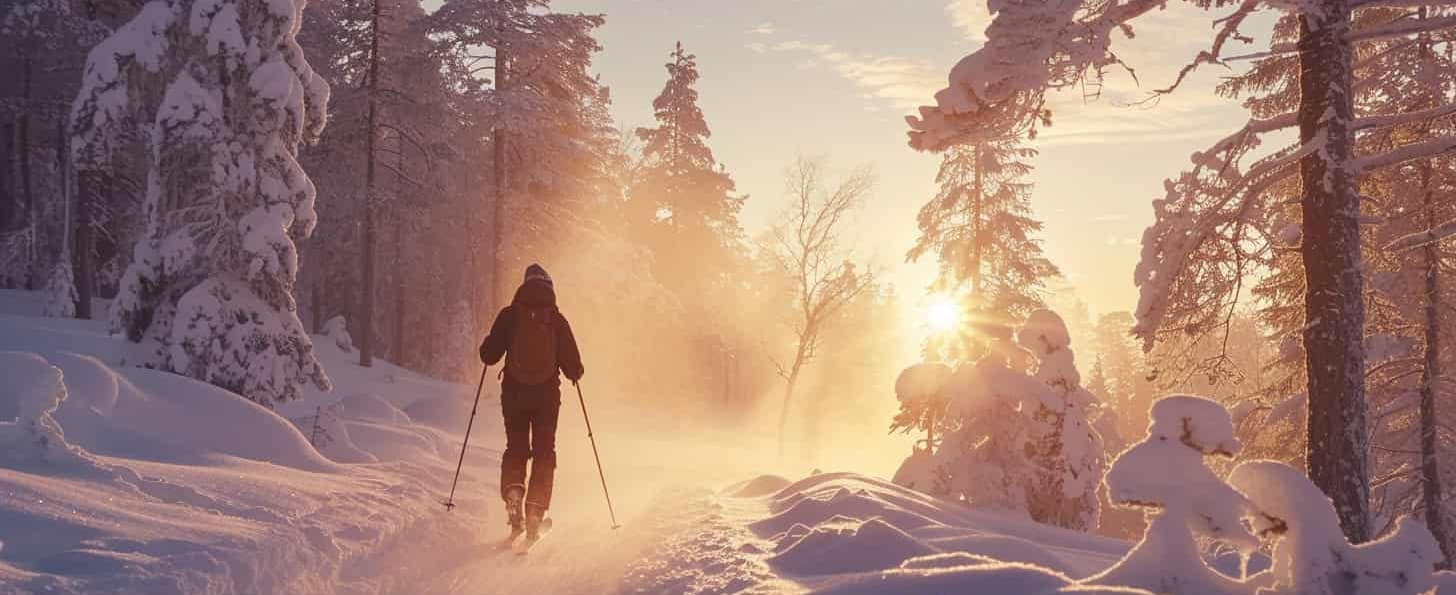
Nordic skiing is any kind of skiing where your heel isn't locked to the ski. Your toe is clipped in, your heel lifts, and you move by kicking and gliding instead of riding a lift and sliding down. Most of the time when people say nordic skiing they mean cross-country skiing on groomed trails, but the term covers a few other things too.
If you've only done alpine (downhill) skiing, it feels very different. It's slower, quieter, cheaper, and a much harder workout.
Where it comes from
Skiing started as a way to get around in the snow, and that was nordic skiing. The word "ski" comes from Old Norse skíð, a split piece of wood. The oldest ski found so far, the Kalvträsk ski, turned up in a bog near Skellefteå in northern Sweden in 1924 and is about 5,200 years old. Rock art in the Altai mountains in Asia may show skiers too, though how old it is and what it shows are still argued about.
For most of that history skis were transport, for hunting, herding and armies. Racing came later. One of the first races reported in a newspaper was in Tromsø, Norway, in March 1843. Cross-country skiing was in the very first Winter Olympics in Chamonix in 1924, with an 18 km and a 50 km race.
Classic vs skate
There are two main techniques, and most trail networks groom for both.
Classic is the one most people picture. Your skis stay parallel, usually in two grooves (the "tracks") cut into the snow by the grooming machine, and you move with a kick and glide that's a bit like a long, sliding walk or jog. Classic skis have a grippy section under the foot, either wax or a textured or skin "kick zone", that grabs the snow when you push down and lets you glide when you don't. It's the easier one to learn.
Skate skiing looks like ice skating. You push off the edge of each ski at an angle, in a V shape, on a wide groomed lane with no tracks. It's faster and harder to learn, and it takes more fitness to keep going. It caught on in racing in the early 1980s, and the American Bill Koch did a lot to popularise it when he won the overall World Cup in 1982.
If you're trying nordic skiing for the first time, start with classic. You'll be moving on your first day.
What gear you need
The gear is lighter and simpler than alpine gear:
- Skis: long, narrow and light. Classic and skate skis are different, and some "combi" setups do both badly.
- Boots: soft, light, and comfortable to walk in. They feel more like a running shoe than a ski boot.
- Bindings: they clip only at the toe, so your heel can lift.
- Poles: longer than alpine poles. Classic poles come up to about your armpit, skate poles to around your chin or mouth.
For your first few times, rent. Most nordic centres rent full setups and run beginner lessons, and a lesson makes a big difference with classic technique.
Other kinds of free-heel skiing
- Telemark skiing is downhill skiing with a free heel. You turn by dropping your back knee into a lunge. It's named after the Telemark region in Norway, where skiers like Sondre Norheim developed the turn and the gear for it in the 1800s.
- Backcountry or touring skiing uses bindings that free the heel for climbing uphill (with skins on the skis) and then lock it for skiing down. It's usually counted as its own thing, not nordic, but it borrows the free-heel idea.
- Ski jumping and nordic combined (jumping plus a cross-country race) are the nordic events you'll see in the Olympics, along with cross-country racing and biathlon.
Why people like it
It's one of the best full-body workouts there is. Arms, legs and core all work, and you can keep your heart rate up for hours. It's low impact, so it's easier on knees than running.
It's also cheap compared with downhill. A day trail pass at a nordic centre usually costs a fraction of a lift ticket, and you don't need a big mountain. A lot of the time you're skiing through quiet forest with nobody else around.
The catch is it's harder than it looks. Your first uphill on classic skis, when the grip won't hold, is humbling.
Where to try it near Vancouver
- Cypress Mountain's cross-country area at Hollyburn has about 19 km of groomed trails, with 7.5 km lit for night skiing, according to Cypress. It's the closest to the city.
- Whistler Olympic Park in the Callaghan Valley, where the 2010 Olympic cross-country races were held, lists over 55 km of trails on its own site.
- Callaghan Country, next door, grooms around 40 to 47 km (its own pages give both numbers), plus more than 15 km of snowshoe trails.
- Lost Lake in Whistler has trails a short walk from the village, which is handy if the rest of your group is downhill skiing.
A few big events
The American Birkebeiner in Wisconsin, running from Cable to Hayward since 1973, is the best-known race in North America: 50 km skate or 55 km classic, with thousands of skiers. The Canadian Ski Marathon goes up to 160 km over two days, and now runs between Mont-Tremblant and Montebello in Quebec.
You don't have to race to enjoy it, but signing up for a short citizen race is a good reason to get out on the trails more than once.
If you've only ever skied downhill, rent some classic skis for an afternoon. I'm curious how many alpine skiers try it once and end up with a second pass.